
Call us
301-363-4651 (Available 9 a.m. to 5 p.m. CST from Monday to Friday)

| Code | CSB-RA010418A18me1HU |
| Size | US$210 |
| Order now | |
| Image |
|
| Have Questions? | Leave a Message or Start an on-line Chat |
| Application | Recommended Dilution |
|---|---|
| WB | 1:500-1:2000 |
| ICC | 1:50-1:500 |
| IF | 1:30-1:200 |
Histone H3.1 mono-methylation at lysine 18 represents a dynamic epigenetic modification that plays a significant role in chromatin regulation and transcriptional control. This post-translational modification contributes to the complex histone code that governs gene expression patterns, making it a valuable target for researchers investigating epigenetic mechanisms, nuclear signaling pathways, and chromatin biology.
This recombinant monoclonal antibody, clone 2B5, offers the reproducibility and consistency that demanding epigenetic research requires. Produced using recombinant technology with a defined sequence, this rabbit IgG eliminates the lot-to-lot variability that can complicate longitudinal studies and multi-site collaborations. The affinity-chromatography purification ensures high specificity for the mono-methylated K18 epitope, critical when distinguishing between different methylation states on the same residue.
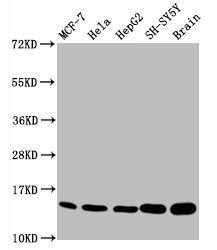
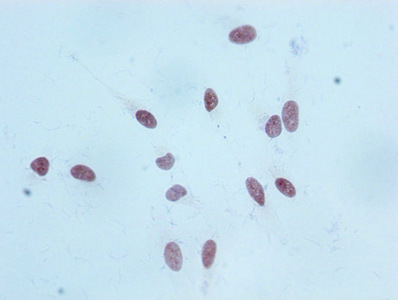
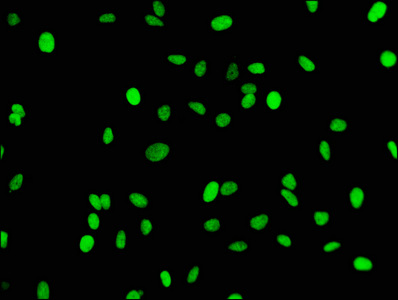
Validation across multiple experimental platforms demonstrates this antibody's versatility in your workflow. Western blot analysis confirms reliable detection of the expected 15 kDa band across diverse human cell lines including MCF-7, HeLa, HepG2, and SH-SY5Y, as well as rat brain tissue, providing flexibility for both cell culture and tissue-based studies. Immunocytochemistry and immunofluorescence applications have been validated in HeLa cells, enabling visualization of this nuclear modification with clear signal when counter-stained with DAPI for cellular localization studies.
The recommended working dilutions span practical ranges for optimization across different sample types and detection systems, from 1:500–1:2000 for western blotting to 1:30–1:200 for immunofluorescence applications. Whether you're mapping histone modification landscapes, investigating chromatin remodeling complexes, or studying epigenetic responses to cellular stimuli, this antibody provides a dependable tool for advancing your research in epigenetics and nuclear signaling.
There are currently no reviews for this product.





